Why Deep Cleaning Your Car After Winter Is Essential in Devon
If you've driven through a Devon winter, your car is carrying far more damage than you can see. Between the salt-laden coastal air sweeping in from Exmouth, the heavily gritted A38 through Exeter, and the muddy rural lanes around Crediton and Dartmoor, your vehicle has faced one of the UK's harshest automotive environments.
That crusty white residue around your wheel arches? It's actively corroding your paintwork, undercarriage, and brake components as you read this. Without proper intervention, you're looking at accelerated rust, permanent paint damage, and repair bills easily exceeding £2,000.
This guide reveals exactly how to deep clean your car after winter in Devon, using professional techniques we apply daily across Exeter and surrounding areas. Whether you're tackling the job yourself or booking professional detailing, understanding the process ensures your vehicle gets the thorough protection it desperately needs.
What Makes Devon's Winter So Destructive to Your Car?
Salt Everywhere—Not Just at the Coast
Even if you rarely visit Dawlish or Exmouth, prevailing south-westerly winds carry salt particles from the English Channel deep inland. This atmospheric salt settles on vehicles throughout Exeter, Crediton, Tiverton, and towards Dartmoor's edges.
Devon County Council maintains over 2,000 miles of gritted roads. Every journey during winter coats your car's underside with corrosive salt solution that works its way into every crevice, joint, and seam.
Relentless Moisture Activates the Damage
Devon receives 900-1,200mm of annual rainfall, heavily concentrated in winter months. This persistent dampness keeps salt chemically active against metal surfaces. Unlike drier regions where salt might sit dormant, our wet climate ensures continuous corrosion—day after day, week after week.
Rural Roads Add Extra Contamination
Devon's beautiful countryside comes with unavoidable mud, standing water, and agricultural residue. These substances trap salt and moisture against components, creating perfect conditions for rust that can begin forming within just a few weeks.
Spring warmth then accelerates this process dramatically, making April and May absolutely critical months for intervention.
The Hidden Costs of Delaying Your Post-Winter Clean
Skipping your post-winter deep clean isn't just about appearance—it's about protecting a substantial financial investment:
Undercarriage corrosion: Salt accumulates heaviest where you cannot see it. Suspension components, brake lines, and chassis sections deteriorate rapidly, causing MOT failures and repairs costing £500-1,500 or more.
Paint damage: Salt penetrates microscopic imperfections in your clear coat, causing bubbling and flaking that requires professional panel respraying at £300-800 per panel.
Alloy wheel pitting: Once corrosion pits your wheels, the damage is permanent and impossible to reverse. Replacement sets typically cost £400-1,200.
Rubber seal deterioration: Seals exposed to salt become brittle and crack, causing water leaks, wind noise, and replacement costs of £200-500.
Reduced resale value: Visible corrosion can slash your vehicle's value by £500-2,000 or more when you come to sell.
The encouraging news? A thorough deep clean costs a fraction of these potential repairs and prevents virtually all this preventable damage.
How to Deep Clean Your Car After Winter in Devon: The Professional Method
Step 1: Undercarriage Cleaning (Your Most Important Step)
The undercarriage collects the heaviest salt deposits yet receives the least attention from standard car washes. This step prevents the most expensive damage.
What you need: Pressure washer (minimum 110 bar) with undercarriage attachment, or access to professional facilities around Exeter's Marsh Barton area.
The process: Thoroughly flush the entire undercarriage, focusing on suspension components, brake assemblies, subframes, exhaust heat shields, and fuel lines. Work systematically from front to rear, ensuring water reaches all recessed areas. Inside wheel arches, remove every trace of caked mud and salt deposits.
Dedicate at least 15-20 minutes to this stage. The salt you cannot see causes the most expensive damage. This single step prevents thousands in future rust repairs.
Step 2: Deep Clean Wheels and Wheel Arches
Wheel arches harbour the worst contamination—a corrosive paste of salt, brake dust, tar, and road grime that standard washes simply cannot touch.
The method: Apply pH-appropriate wheel cleaner (always check your wheel finish first—polished aluminium requires pH-neutral formulas to avoid damage). Use dedicated brushes to reach spoke faces, inner wheel barrels, brake callipers, and arch liners.
Work one wheel at a time, rinsing thoroughly before products dry on the surface. The inner wheel barrel collects heavy salt deposits and rarely receives proper cleaning—a flexible wheel brush reaches these hidden surfaces effectively.
Step 3: Snow Foam Pre-Wash Application
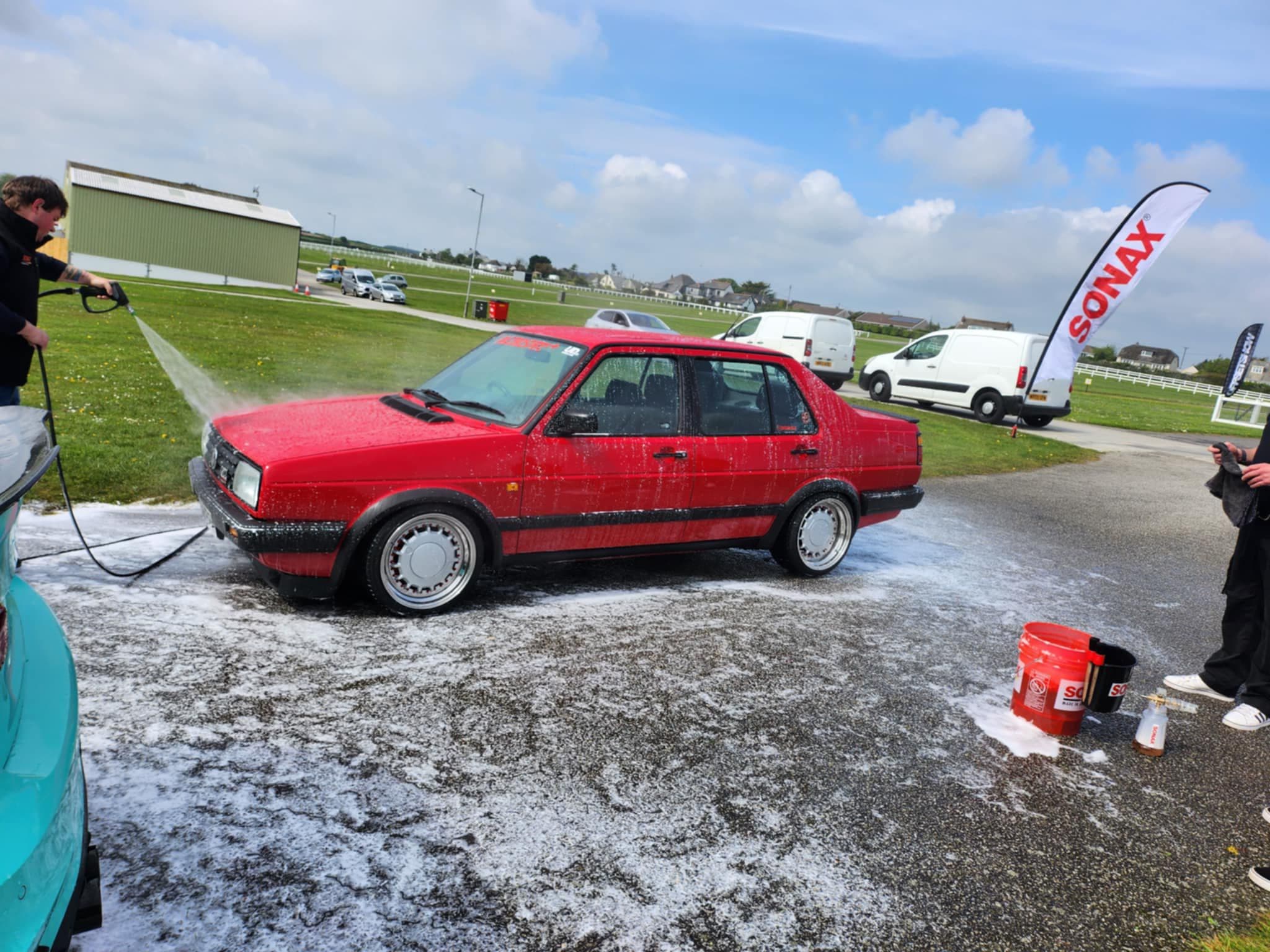
Before any wash mitt touches your paintwork, apply thick snow foam across all external surfaces. This softens bonded contamination, allowing it to rinse away rather than scratch across your paint during washing.
Allow 5-10 minutes dwell time—Devon's winter grime is particularly stubborn and needs time to break down. Rinse thoroughly from top to bottom, removing maximum contamination before contact washing begins.
Step 4: Two-Bucket Contact Wash Method
This is the safest washing method to avoid inflicting wash-induced scratches:
- Fill one bucket with quality pH-neutral shampoo, one with clean rinse water
- Use grit guards in both buckets to trap particles at the bottom
- Start at the roof, working downward in manageable sections
- Wash each section, rinse your mitt thoroughly in clean water, then reload with shampoo
- Use a separate mitt for lower panels where salt concentration is always highest
This prevents contamination dragging across paintwork—the primary cause of swirl marks that dull your finish over time.
Step 5: Clean the Hidden Salt Traps
Winter salt accumulates in areas most people overlook:
- Door jambs and shuts: Open all doors, boot, and bonnet. Clean painted edges and rubber seals with diluted all-purpose cleaner
- Bonnet and boot shut lines: These channels collect significant salt concentrations
- Fuel filler area: Heavily contaminated from constant roadside spray
- Window channels and drainage holes: Salt blocks drainage, eventually causing interior water leaks
- Grilles and badge recesses: Use detailing brushes for packed-in contamination
- Under wiper arms: Salt corrodes mechanisms and damages windscreen seals
Five extra minutes addressing these areas prevents hundreds in future repairs.
Step 6: Clay Bar Treatment for Bonded Contaminants
After washing, run your hand across your bonnet. Does it feel rough rather than glass-smooth? That roughness is bonded contaminants—metallic particles, tar, and industrial fallout that washing alone cannot remove.
Using a clay bar or clay mitt with proper lubricant, work methodically in small sections until all surfaces feel completely smooth. This step is essential before applying protection—wax applied over contaminated paint fails prematurely and wastes your effort.
Step 7: Apply Quality Paint Protection
Cleaning without protection wastes half your effort and leaves your car vulnerable. Apply quality carnauba wax, synthetic sealant, or ceramic spray coating to protect against:
- Spring and summer UV radiation that fades paint
- Heavy Devon pollen loads throughout late spring
- Tree sap and bird droppings (both etch through paint rapidly)
- Road grime and atmospheric pollutants
- Water spotting from Devon's naturally hard water
Quality protection lasts 3-6 months with proper maintenance between applications.
Interior Salt Stain and Odour Removal
Salt tracked in on footwear leaves crusty white deposits on carpets and floor mats, whilst trapped moisture creates persistent musty odours throughout the cabin.
DIY method: Vacuum thoroughly first to remove loose debris. Mix equal parts white vinegar and warm water, then gently blot (never rub) stained areas with clean microfibre cloths. Allow complete drying with windows open or use a fan to speed the process.
Professional solution: For stubborn staining or persistent odours that won't shift, our valeting services include hot water extraction that removes deep contamination regular vacuuming simply cannot reach.
When Is the Best Time to Deep Clean Your Car After Winter?
April and early May offer the optimal window. You're addressing accumulated damage before warmer weather accelerates corrosion processes, whilst simultaneously preparing your vehicle for summer coastal trips to Sidmouth, moorland adventures on Dartmoor, or daily Exeter commuting.
Temperatures are mild enough for comfortable outdoor work but warm enough for cleaning products to work effectively and surfaces to dry properly.
Why Choose Professional Mobile Valeting?
Whilst DIY deep cleaning is certainly possible, professional service offers distinct advantages:
Time efficiency: Professional teams complete comprehensive deep cleans in 2-3 hours versus 6-8 hours DIY, freeing your entire weekend.
Superior equipment: Commercial-grade pressure washers (150+ bar), rotary polishing machines, and hot water extractors achieve results impossible with domestic equipment.
Professional-grade products: Trade formulations significantly outperform consumer alternatives, providing superior cleaning power and longer-lasting protection.
Expert damage identification: Trained technicians spot developing issues—early rust spots, paint defects, seal damage—before they become expensive problems requiring specialist repair.
Ultimate convenience: Mobile valeting near you brings professional service directly to your Exeter home or workplace—no travelling, no waiting around, no dedicating entire weekends to cleaning.
For severe salt staining, paint correction requirements, or comprehensive protection, professional intervention delivers guaranteed results. Get a free quote to discover how affordable professional post-winter cleaning actually is.
Maintaining Results Through Spring and Summer
Once you've invested time and effort to properly deep clean your car after winter in Devon, maintain those results with simple regular care:
- Wash every 2-3 weeks using the proper two-bucket technique
- Use quick detailer spray between washes for light pollen and dust
- Reapply protective wax or sealant every 3-4 months
- Address bird droppings and tree sap immediately—both etch through paint within hours in warm weather
- Keep drainage channels clear during Devon's heavy pollen season
- Inspect your undercarriage occasionally for any developing rust spots
Protect Your Investment This Spring
Your car has endured another challenging Devon winter. A comprehensive deep clean now prevents costly repairs later whilst restoring that pride-of-ownership feeling every time you drive.
We bring professional post-winter deep cleaning directly to homes and workplaces across Exeter and throughout Devon, using commercial-grade equipment and professional products that deliver outstanding, long-lasting results. From thorough undercarriage salt removal to paint protection and interior deep cleaning, we handle everything whilst you focus on what matters most.
Your Devon car deserves professional attention after months of punishing winter conditions. Contact JJ Mobile Valeting today for expert post-winter care that protects your investment and keeps your vehicle looking its absolute best throughout the year ahead.